
When you dump soil, build a ramp with the dozer or backfill a trench, the new ground is loose. Loose ground is soft: tyres sink into it, wheels spin, and trucks bog down. Compacting it presses the soil together into firm ground that carries traffic. Two things do it: the soil roller and the plate compactor.
Loose and compacted ground
- Loose fill is anything you have put down that has not been pressed: a dumped heap, a dozer's spread, backfill. It counts as loose while it sits as a heap, and also after the game folds the heap back into the ground, because the ground there is still fresh fill.
- A compacted column has a compaction value. Soil is firm at 100 %. Anything less is partly compacted and gives partial grip.
- Compaction is measured per half-metre square of ground. The vehicle screen shows it as "Compaction" while you roll, and the plate compactor shows it in its prompt.
What it changes:
- Grip. Compacted ground takes on the grip of a packed earth road, which is better than gravel and not much worse than concrete. Trucks do not spin or sink.
- Bogging. A truck starts bogging in more than about 15 cm of loose fill and is held fast at about 60 cm. The thickness that counts is the fill depth, reduced by the compaction. Firm ground counts as no fill at all. See trucks and dumpers.
- Ruts. Vehicles sink into soft ground and leave tread marks. On compacted ground they leave far fewer.
Digging the ground away, or burying it under new fill, resets the compaction there. It is kept when you save.
Passes
Each time a compactor goes over a spot, that spot gains compaction. A pass is counted once per trip: if you turn round and cross it again right away, that is not a new pass. You need to leave the spot for about three seconds before the next crossing counts.
| Tool | Passes to reach firm | Notes |
|---|---|---|
| Soil roller, vibration on | 2 | Drive no faster than 1.5 m/s. |
| Soil roller, vibration off | about 6 | Static weight only. |
| Plate compactor | 3 | Hand-guided, about 0.5 m wide. |
Driving the roller faster than 1.5 m/s lessens each pass: at 3 m/s, its top speed, a pass gives less than a third.
Compactors also level: while the drum or plate goes over a loose heap, it presses the high spots down and fills the low ones, so the heap becomes a flat surface with the same amount of soil. This is how you finish a fill. See loose material.
Soil roller
A 12 t single-drum roller. The drum is 2.14 m wide. Buy it in the Machines group: $34,000, company level 3, and you need to own a dozer first. You can own two. Keys are in driving machines.
| Key | What it does |
|---|---|
| W S A D | Drive; it steers by bending in the middle (35 degrees each way). |
| H | Vibration on or off. |
| C | Cab view. |
| L | Lights. |
| E | Get out. |
Vibration only works while the engine runs and has fuel. When it is on the prompt says "Vibration on" and you hear a low rumble; the drum shivers. The roller presses the ground under the drum every quarter of a metre of travel, forwards and backwards alike.
The Compaction gauge on the vehicle screen shows how firm the ground under the drum is, from empty to firm.
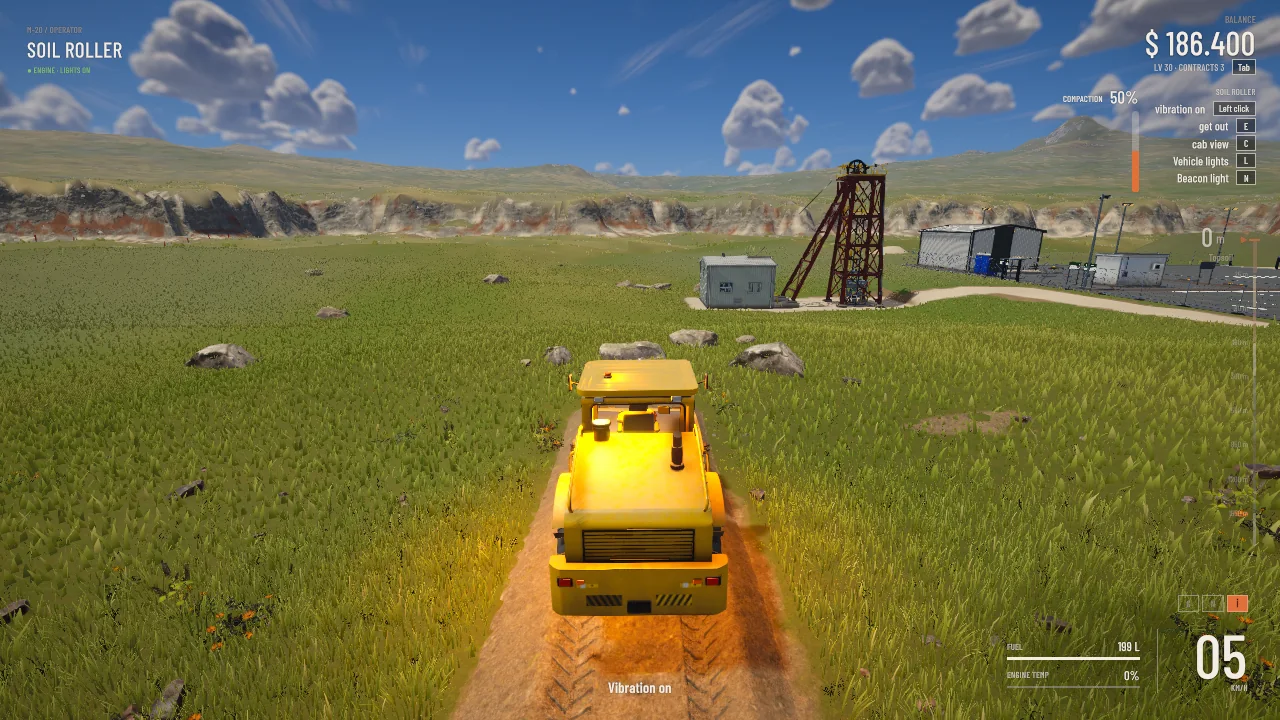
Plate compactor
A hand-guided vibrating plate, for places the roller cannot go: trench backfill, narrow ramps, round a footing. Buy it in the Tools and supplies group for $1,800. It has no requirements. It goes into your inventory; put it on the hotbar and select it.
| Key | What it does |
|---|---|
| Left click (hold) | Compact. |
| W S A D | Walk. |
While you hold the click the plate works, and you walk slowly: 0.9 m/s forwards, 0.5 m/s backwards, no sprinting or jumping. When you let go you walk at 1.6 m/s. It will not push into a wall in front of you. The prompt reads "Left click: compact · Compaction n %" with the value under the plate.
Seeing the result
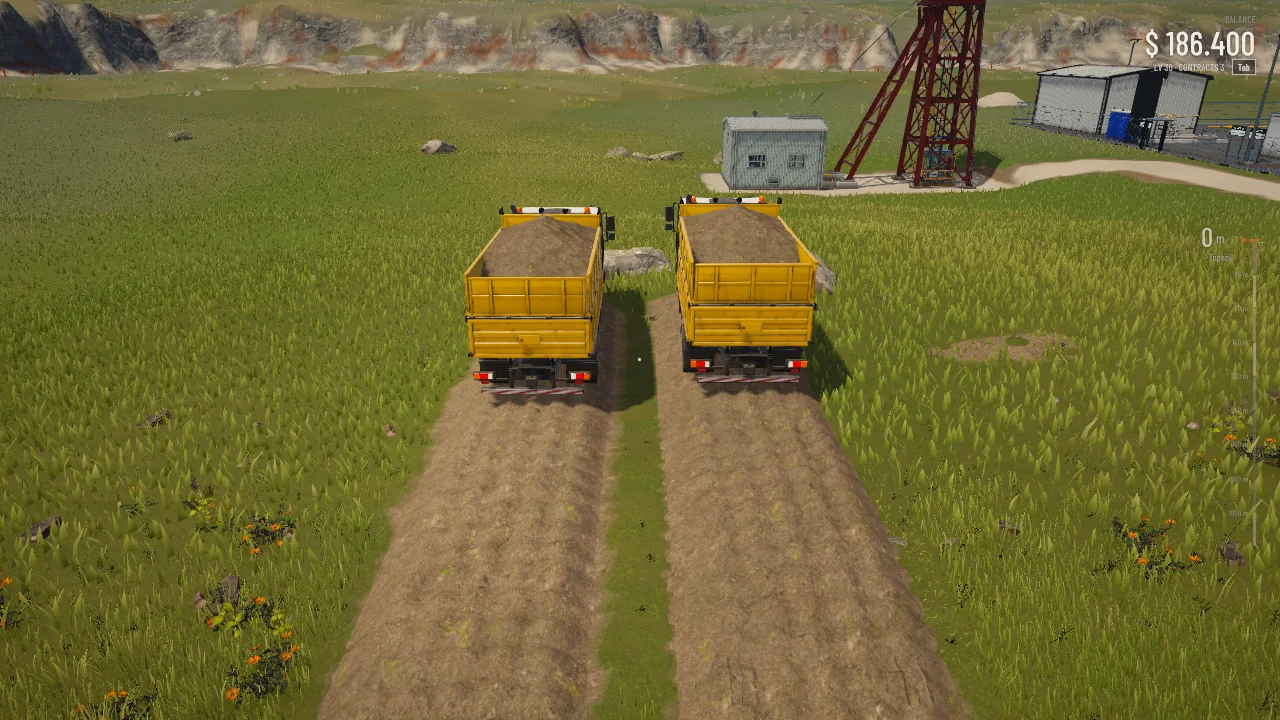
A rolled strip is smooth and flat; a compacted road shows hardly any tread marks. Trucks that bogged in the loose lane drive the compacted lane without trouble.
Tips
- Spread the fill first with the dozer, then roll it. A thin even layer compacts in fewer passes than a heap.
- Keep the roller at a walking-speed crawl with vibration on. Two slow passes beat four fast ones.
- Roll your haul road before you run the heavy truck on it.
- If the ground has been dug away or built over since you compacted it, the compaction is gone: roll it again.