
Deep Shaft is a dig to the centre of the Earth, packed into a few kilometres. The ground is made of nine layers, in the same order as the real Earth. The deeper you go, the harder the rock, the hotter the air, and the better the ore.
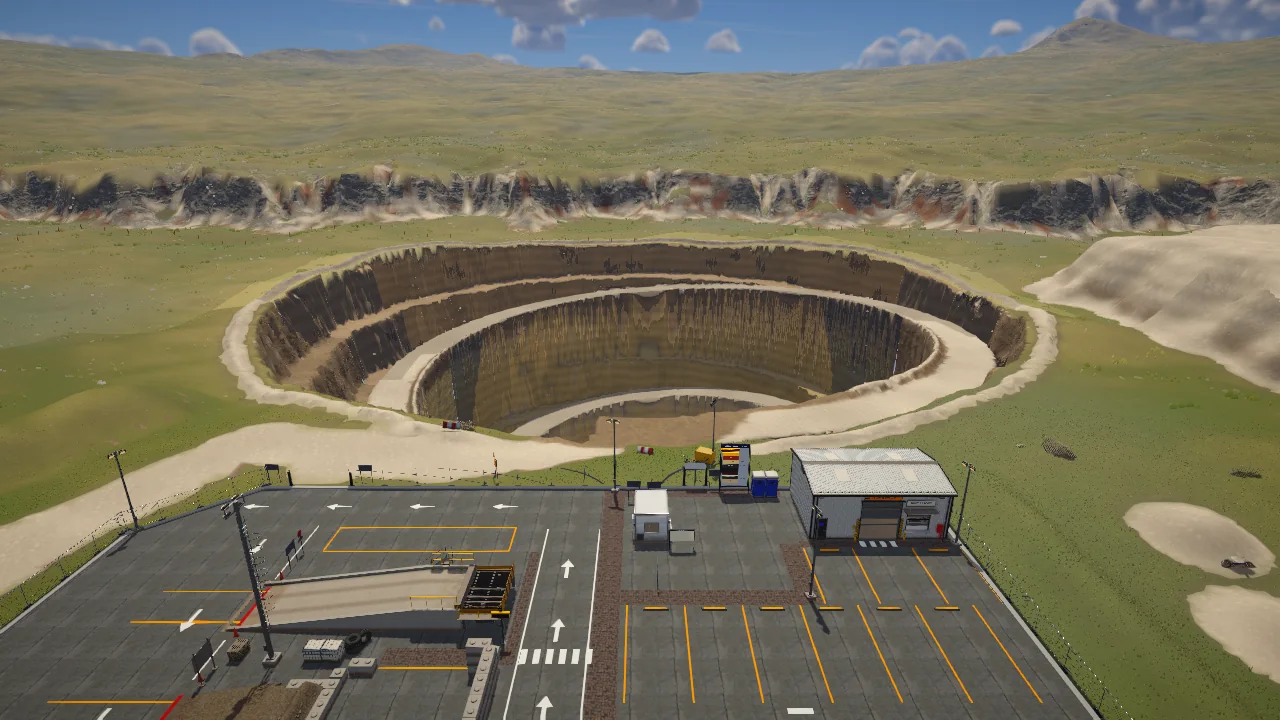
The layers
Depths are metres below the surface in a normal world.
| # | Layer | From | To | What you dig | Needs |
|---|---|---|---|---|---|
| 1 | Topsoil | 0 | 25 | Grassy soil, topsoil, gravel lenses | Shovel |
| 2 | Sand | 25 | 80 | Sand (it slides and collapses) | Shovel |
| 3 | Clay | 80 | 160 | Clay | Pickaxe |
| 4 | Limestone | 160 | 300 | Limestone | Rock pickaxe |
| 5 | Granite | 300 | 550 | Granite | Rock pickaxe |
| 6 | Basalt | 550 | 850 | Basalt | Rock drill |
| 7 | Upper mantle | 850 | 1,200 | Igneous rock | Rock drill |
| 8 | Lower mantle | 1,200 | 1,550 | Mantle rock (peridotite) | Rock drill with button bit |
| 9 | Core | 1,550 | centre | Core iron-nickel | Sealed until the finale |
The core is closed to you until the last contract.
Deeper worlds
When you start a new world you can pick the Depth:
| Option | Layers are | The core starts at |
|---|---|---|
| Normal | as above | 1,550 m |
| Deep | 1.5 times thicker | 2,325 m |
| Very deep | twice as thick | 3,100 m |
Every layer boundary scales with it. The cage hoist runs faster to match.
Materials and tiers
Every material has a tier, the lowest tool tier that can cut it. Your tool must be at or above it.
| Tier | Materials | Cut by |
|---|---|---|
| 0 | Grassy soil, topsoil, gravel, sand, coal, copper ore, old coins, fossil shells | Shovel |
| 1 | Clay and every other ore (iron, quartz, lead, tin, amber, silver, calcite, gold, gems, titanium, uranium...) | Pickaxe |
| 2 | Limestone | Rock pickaxe (tier 3) |
| 3 | Granite | Rock pickaxe |
| 4 | Basalt, igneous rock | Rock drill, blasting, excavator breaker |
| 5 | Mantle rock, core iron-nickel | Rock drill with button bit, blasting |
Tools by tier: the shovel is tier 0, the pickaxe tier 1, the rock pickaxe tier 3 and the rock drill tier 4 (5 with the button bit). Tools are covered in hand digging and the rock drill. Dynamite breaks anything.
Harder rock also takes more strikes. Basalt is about 12 times harder to break than soil and mantle rock about 18 times.
Machines
- Excavators (mini, 20 t, backhoe loader) dig soil, sand, gravel and clay with a bucket. With the hydraulic breaker upgrade an excavator breaks rock too.
- The roadheader cuts limestone and, with its hard-rock head, granite.
- The TBM and the jumbo (drill and blast) take on basalt and the deep rock.
What each layer is like
- Topsoil. Safe and easy. Coal, copper and old coins near the surface.
- Sand. "Sand layer! Sand collapses: place beams where you dig." A sand ceiling holds a while and then falls. Timber holds it back (supports, cave-ins).
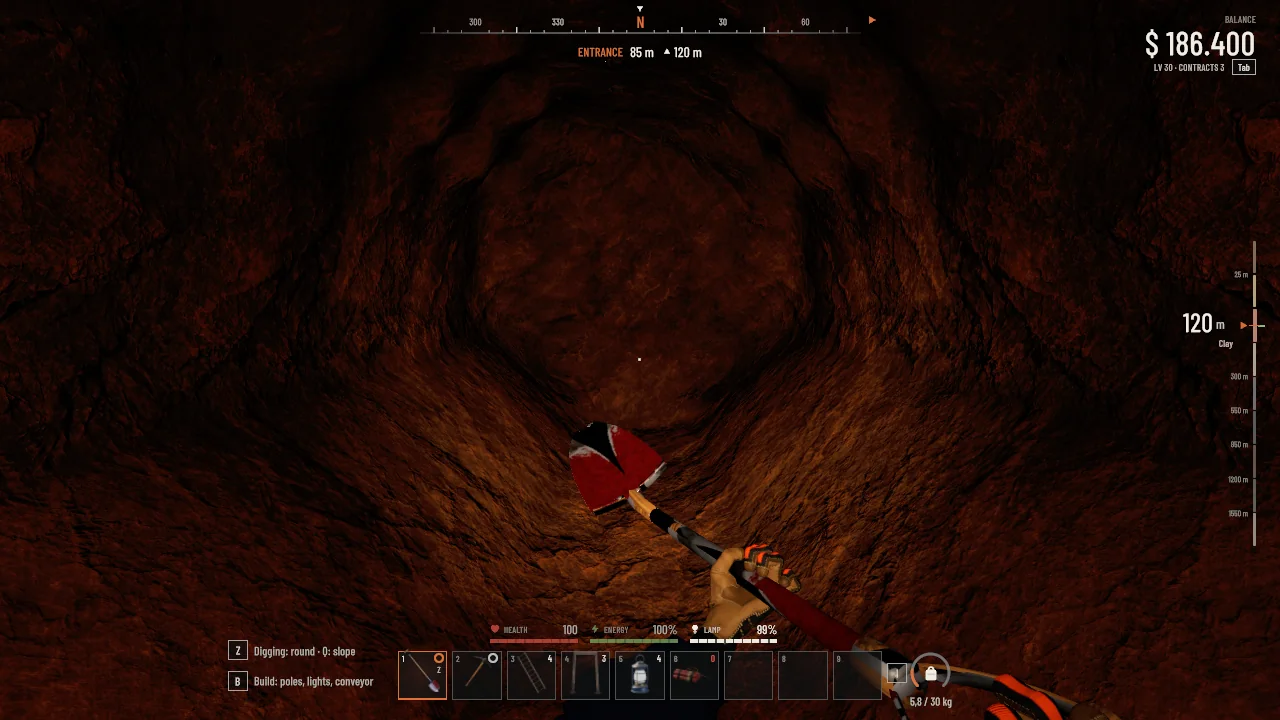
- Clay. Groundwater seeps in. Pumps and a settling tank on the surface deal with it (water and swimming).
- Limestone. Methane pockets (use a gas detector, see air, gas and heat), and natural caves.
- Granite. Rock bursts: stressed walls can throw rock out. A wall propped with beams does not burst.
- Basalt. Hot. A cooling vest helps a lot.
- Upper mantle. Lava glows in the cracks and the air is very hot. A reflective heat suit is a must.
- Lower mantle. Immense pressure and heat.
Caves
New worlds have natural karst caves in the limestone layer: large chambers with floors you can walk on, linked by narrow crawl tubes. Some passages are flooded. Caves are a good place to find ore and finds, but also gas and water. Take a lantern.
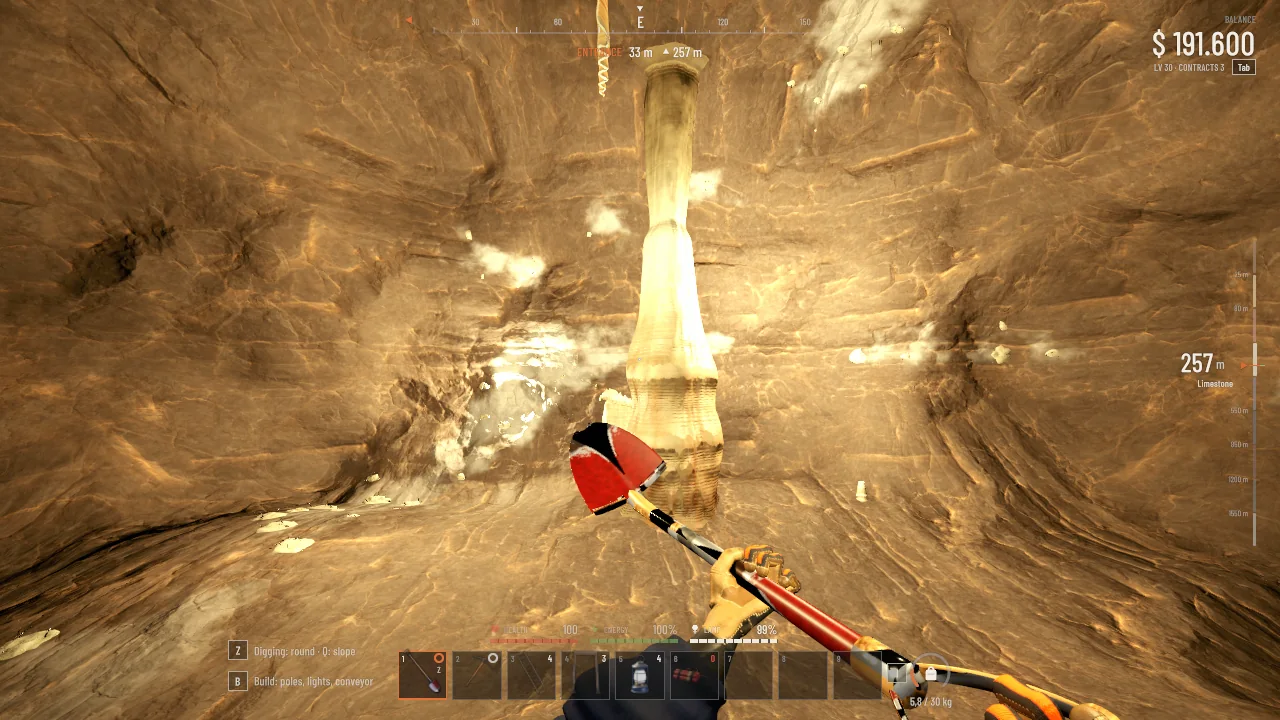
Depth on screen
The strip on the right of the HUD shows the layers as coloured bands. A marker shows your depth, the number is in metres and the layer's name is under it. A second tick marks your deepest dig so far.
Real Earth
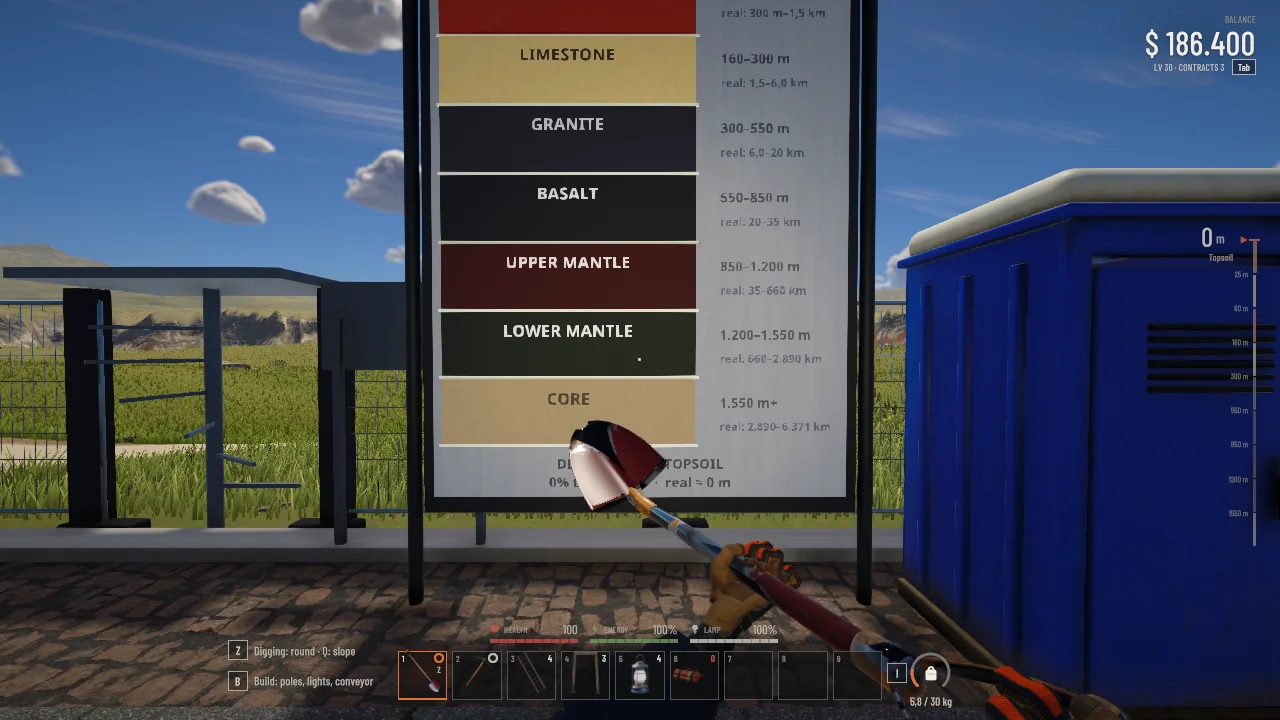
The order of the layers is real, the scale is not. The whole way to the real centre of the Earth is packed into 1,550 m of digging. The depth board in the camp and the Depth page of the field notebook show what each layer is on the real Earth:
| Layer | Real depth |
|---|---|
| Topsoil | 0–25 m |
| Sand | 25–300 m |
| Clay | 300 m–1.5 km |
| Limestone | 1.5–6 km |
| Granite | 6–20 km |
| Basalt | 20–35 km |
| Upper mantle | 35–660 km |
| Lower mantle | 660–2,890 km |
| Core | 2,890–6,371 km |
The deepest hole ever drilled on Earth, Kola SG-3, stopped at 12,262 m.
Tips
- Buy the next tool before you reach the next layer: pickaxe before the clay at 80 m, rock pickaxe before 160 m, rock drill before 550 m.
- A hand-dug shaft through sand needs timber or it will close in.
- Read the layer hint toasts when you enter a layer. They tell you what you need.